Probably not, but the job is definitely changing.
I personally spend much less time writing code these days. Most of my time is spent managing AI agents and reviewing their work, almost like working with a team of engineers.
That shift matters more than the “AI will replace developers” debate, because writing code was never the most important part of the job.
The real value was always somewhere else: understanding the problem, thinking through the architecture, and translating messy requirements into something that actually works.
And that part hasn’t gone away.
But engineers who refuse to adapt probably will, and junior developers who rely entirely on AI without understanding what they’re building won’t last very long either.
There is a right way to use AI in 2026 if you want to stay productive, and a very wrong way.
Let’s dive in.
What Everyone Is Actually Arguing About
When people say "AI will replace developers" they usually mean one of three different things.
They either mean that junior roles will disappear, the whole profession is going away, or that AI will make engineers so efficient that companies will simply need fewer of them.
These are three completely different claims, and most of the debate online mixes all of them together. So before we go anywhere, let's be honest about what's real.
Yes, AI can write code. Good code, sometimes. It can scaffold a feature, write tests, handle boilerplate, and explain an error faster than any Stack Overflow thread. That part is not hype. If you've used these tools daily, you know they genuinely change the pace of work.
But here's the part that gets left out of the conversation.
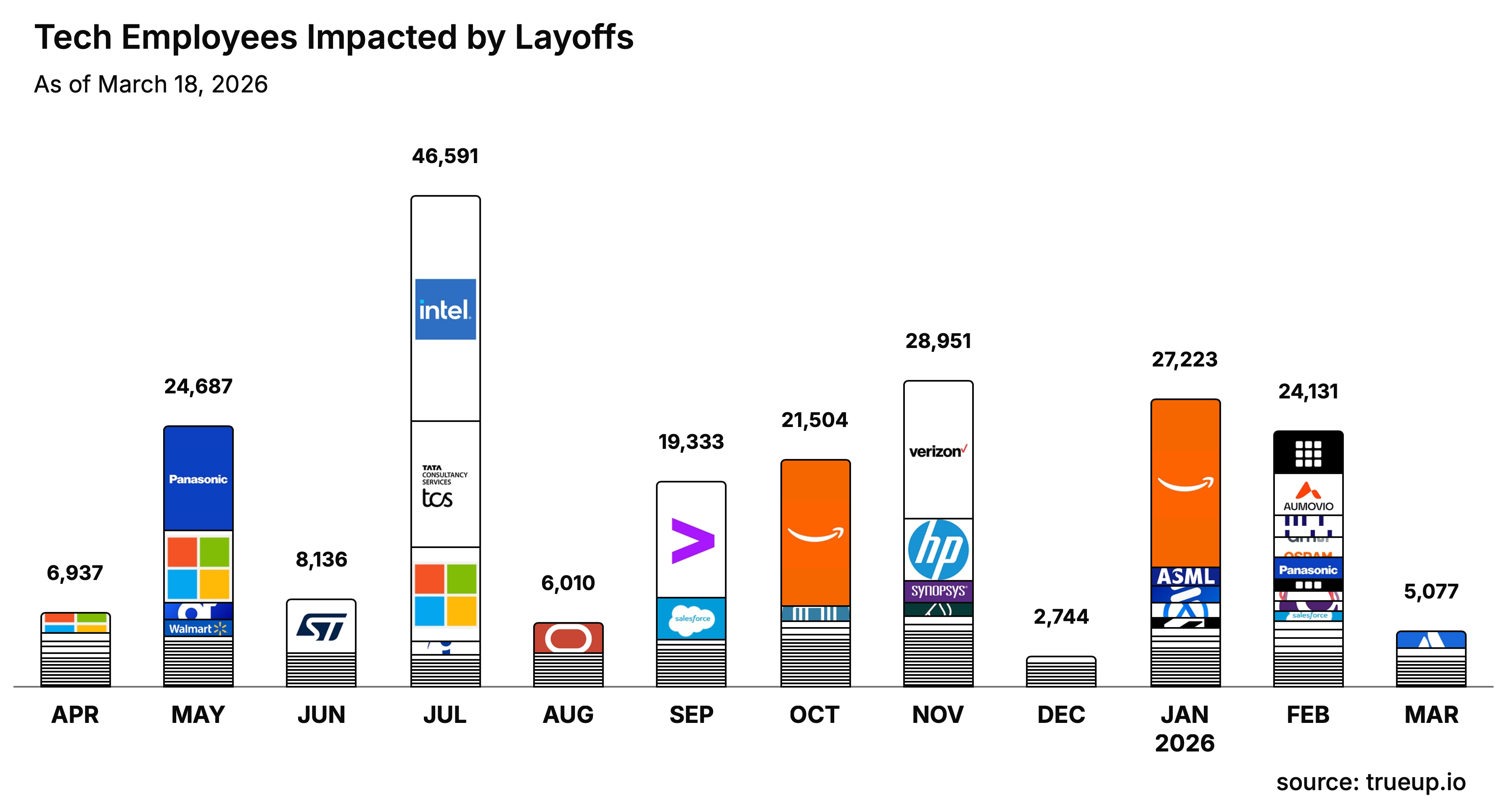
Very few layoffs in recent years were actually tied to direct AI automation. Most were companies correcting for overhiring during the boom years between 2020 and 2022. Saying "we're going AI-first" is a better headline than "we hired 30 engineers when we only needed 10." Same layoffs. Better story.
AI didn't kill the job market. The job market corrected itself, and AI got the credit or the blame, depending on where you sit.
But that still doesn't answer the deeper question. Even if developers aren't being replaced right now, what about the work itself? Is the job changing in ways that matter?
Yes. And this is where it gets interesting.
AI Fixes the Code, Not the Problem
A while back, I ran into a bug in the staging environment of an app I help maintain, and it stuck with me. Not because it was complicated, but because of how simple the real fix turned out to be and how AI completely missed it.
You see, in that app, we have a job scheduled to run daily. Its job is straightforward: check documents and expire the ones that have passed their expiration date.
But at some point, we disabled it: development had been paused, costs needed to be cut, and staging wasn’t really needed for a while. It stayed off for about four months.
When we turned staging back on, something was wrong. Many users were showing incorrect expiration states. The data looked off and I wasn’t sure why.
So I asked Codex, which looked at the code, analyzed the logic, and started suggesting fixes:
- Change this condition
- Adjust that check
- Add this validation
The suggestions looked reasonable, but really, the code was completely fine.
The real problem was that the scheduled job only looked back four days when checking for expired documents. After four months of not running, there was a massive gap. The fix wasn't a code change at all. It was just running a script to backfill the last four months of missed processing. There was no need to change any code, since there was no bug.
AI never got there… It kept staring at the code because that's all it can see. You could argue that if Codex had full access to that Heroku account, it would have likely seen that the scheduled job was missing, but giving full access to infrastructure to any AI is still something where I draw the line.
At the end of the day, the problem wasn’t in the code. It was based on a human decision dictated by business needs.
The Knowledge AI Cannot Access
This is worth sitting with for a moment.
Good engineers carry context that isn't written anywhere. They remember the cost-cutting decision from last quarter. They know why a certain table is structured the way it is, even though the original developer left two years ago. They know which parts of the system are fragile and why. It's not because it's documented, but because they were there when it broke.
AI works from what it can see: the code, the error, the prompt you gave it. It has no access to the meeting that never got written down. It can't ask the right question because it doesn't know the right question exists.
This gap doesn't disappear just because models get better. Even a much smarter AI still only knows what it's been told. The institutional memory of a system lives in the people who built and maintained it. That's not a limitation of today's tools.
That's a structural reality.
Translation Is Still a Human Job
Here's the other side of this.
Clients can use AI to build apps now. That's real. You can describe what you want, generate something functional, and ship it without writing a single line of code yourself. The tools exist. People are doing it.
But most clients still hire engineers. And the reason isn't that they can't use AI themselves. It's the same reason most people still call a plumber even though they could theoretically fix a leaky pipe themselves.
They don't want to think about it or deal with it. After all, they don't know what they don't know, and when something goes wrong in a way they didn't expect, they don't know where to start to fix it.
Software is the same. A client can prompt an AI to build an app, but they often can't communicate exactly what they want. They describe the surface, not the system. They say "I want users to be able to track their orders" without knowing that this single feature touches authentication, database design, notification logic, and mobile layout. Getting from "here's what I want" to "here's what you actually need" is a translation job. It requires someone who understands both the business and the technology well enough to bridge them.
That's why business analysts still exist. That's why good engineers ask questions before they write code. The requirement-gathering process, figuring out what a system needs to do before deciding how to build it, is something AI cannot replace, because the client often doesn't know how to tell it what they need.
And there's one more piece to this. A good engineer doesn't just build what the client asks for. They push back when something doesn't make sense. They suggest a simpler approach. They flag a technical decision that sounds reasonable on paper but will create problems at scale. That judgment comes from experience and business understanding. It's not in the prompt.
AI is lazy. It will create features that work, but the code will often be messy, unmaintainable, or poorly structured unless you guide it properly.
What Actually Gets Displaced
Let's be honest here too, because the picture isn't all good news.
Some of what junior engineers used to do is genuinely getting automated. Repetitive boilerplate, simple helper functions, basic test generation, straightforward refactoring, and tons of UI work.
AI handles these faster and with less friction than a person would.
This means the learning path has changed. Before AI, juniors built experience by writing repetitive, simple code. That code taught them patterns, structure, and how things connect. Now AI writes that code instantly. What's left is understanding it, debugging it, and knowing when it's wrong.
That's harder to learn passively. And it's worth being honest that many juniors lose the repetitive practice that used to teach them how systems work. That's a real cost, but for the ones who push through it, it's actually a better foundation. The engineers who grow in this environment skip the surface-level work and go straight to the thinking.
The floor is rising.
What used to require a team of five can now be done by two people with the right tools. That creates real pressure at the entry level, but it also means engineers who develop genuine depth, who understand systems, not just syntax, will have more leverage than ever before.
The Question That Actually Matters
The engineers who will struggle in this environment are the ones who let AI do the thinking entirely. Who accept the first output, ship it, and move on without understanding what they built. They'll feel productive for a while, but when something breaks in a way AI can't diagnose like a cron job that's been off for four months, they won't know where to look.
The engineers who will thrive are the ones who ask the right questions before touching the code. What problem are we actually solving? Does this approach make sense for the business? What context am I missing?
I've seen this play out enough times to believe it. The value of a good engineer was never just in writing code quickly. It was in knowing which problem to solve, understanding the system well enough to ask the right question, and having enough business sense to know when the requirement itself is wrong.
AI didn't change that. It just made it more visible.
The Question Most Developers Skip
Most developers are asking: will I still have a job?
That's not the most useful question.
The better question is: what does good engineering look like when the repetitive work gets automated?
The answer has always been the same. Understand the business. Own the context. Ask why before asking how. Know enough about the system's history to recognize when the problem isn't in the code.
AI changed the pace of the work. It didn't change what the work is actually for.
The developers who bring business thinking, institutional memory, and the ability to translate between what clients say and what systems need, those developers aren't disappearing.
They're just harder to replace, which was always the goal.
Don’t want to be left behind?
If you want to build a real workflow around AI instead of just experimenting with tools, I’m working on a course that will be released in the coming weeks: The Developer’s AI Productivity Blueprint .
It contains everything I’ve learned over the past few months, starting all the way from the basics, to the role shift we’re seeing, as well as more advanced topics like multi-agent workflows.
Check out the course’s page for more details and join the waitlist. I’ll be selecting a few people that will get the course for free in exchange for feedback.